Agentic AI: What It Really Means for Your Business (And Why Security Changes Everything)
Artificial intelligence is evolving faster than most business leaders can keep up with. While many companies are still exploring basic AI chatbots or automation tools, a new and far more powerful paradigm is already reshaping industries: Agentic AI. But what exactly is it, and more importantly, what does it mean for your business — especially when it comes to security?
In this article, we break down everything you need to know about Agentic AI, how it differs from traditional AI, the enormous opportunities it unlocks, and why security must be at the center of any deployment strategy.
What Is Agentic AI? A Plain-Language Definition
Agentic AI refers to artificial intelligence systems that can act autonomously to achieve goals, not just respond to prompts. Unlike a standard AI model that answers a question or generates content on demand, an agentic AI system can:
- Break down complex tasks into subtasks
- Make decisions based on context and objectives
- Use tools, APIs, and external systems independently
- Learn from its environment and adapt its approach
- Execute multi-step workflows without constant human input
Think of traditional AI as a very smart assistant that waits to be asked. Agentic AI, by contrast, is more like an autonomous employee — one that can plan, act, check its own work, and iterate until the job is done.
This is not science fiction. Businesses are already deploying agentic systems for tasks like customer service management, supply chain optimization, software development, research, financial analysis, and much more. If you want to explore how this technology can be integrated into your own organization, visit our dedicated page on Artificial Intelligence solutions.
How Agentic AI Differs from Traditional AI and Automation
To truly understand the impact of Agentic AI, it helps to compare it to what came before:
Traditional Rule-Based Automation
Traditional automation follows pre-programmed rules. If X happens, do Y. It is rigid, brittle, and requires extensive manual configuration. It breaks when it encounters anything outside its defined parameters.
Standard Generative AI
Generative AI (like the popular large language models) can produce human-like text, images, and code. But it typically responds to single prompts and does not take sustained, goal-driven action on its own.
Agentic AI
Agentic AI combines the reasoning power of large language models with the ability to plan, act, monitor, and iterate. It operates within feedback loops, uses tools and data sources dynamically, and can coordinate multiple processes simultaneously. This makes it exponentially more powerful — and exponentially more consequential if something goes wrong.
The Real Business Opportunities of Agentic AI
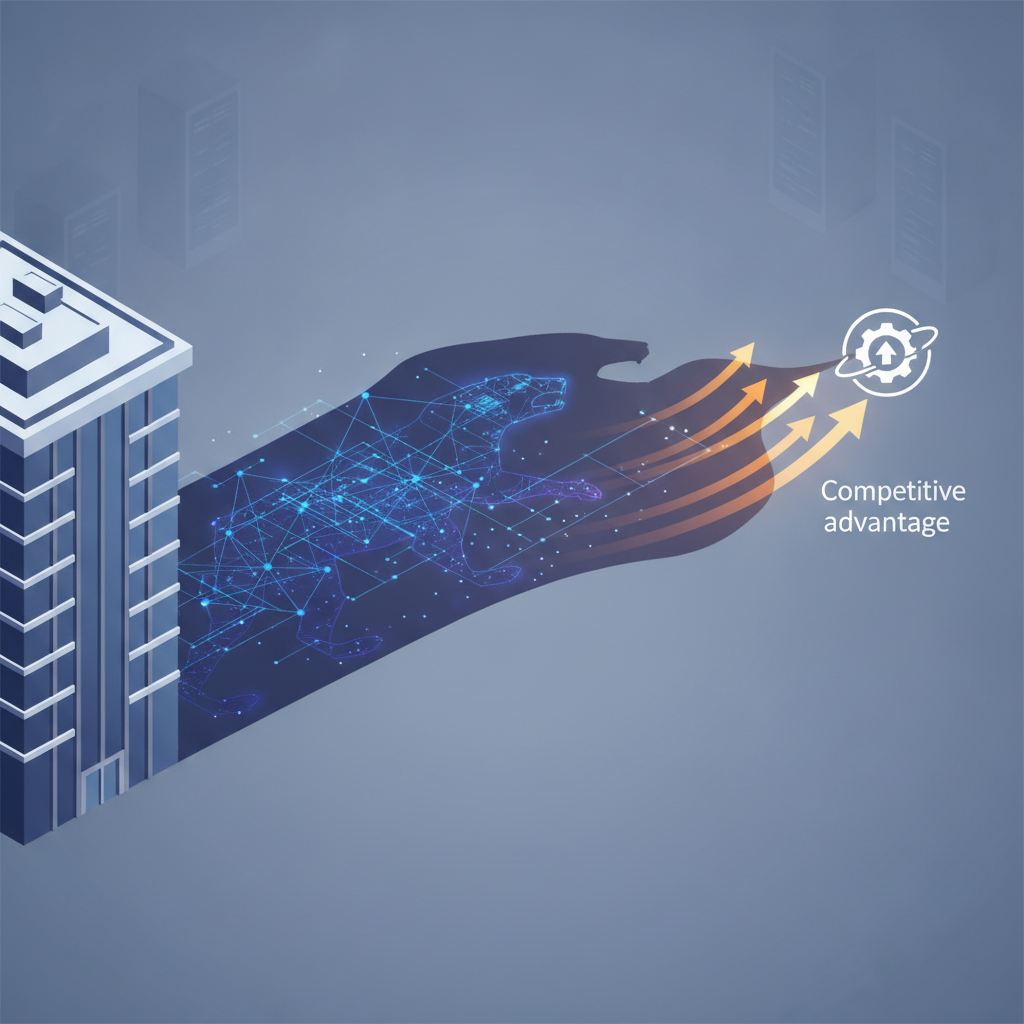
For forward-thinking companies, Agentic AI represents one of the most significant competitive advantages of the decade. Here is where the impact is already being felt:
1. Hyperautomation of Complex Workflows
Businesses can now automate not just simple, repetitive tasks, but entire complex workflows that previously required human judgment. From onboarding new clients to managing procurement processes, agentic systems can handle end-to-end processes with minimal supervision.
2. Intelligent Customer Experiences
Agentic AI can manage customer interactions across multiple channels simultaneously, resolving issues, escalating when necessary, personalizing responses, and learning from every interaction — delivering a level of service that scales without proportional cost increases.
3. Accelerated Research and Development
In industries like pharmaceuticals, finance, and engineering, agentic systems can autonomously conduct research, analyze massive datasets, generate hypotheses, test them against available data, and report findings — compressing timelines from months to days.
4. Proactive Decision Support
Rather than waiting to be asked, agentic AI can monitor business environments continuously, identify risks and opportunities, and alert decision-makers — or even take pre-approved corrective actions — in real time.
5. Scalable Operations Without Proportional Headcount Growth
One of the most immediate business benefits is the ability to scale operations dramatically without a matching increase in staff. Agentic AI agents can work continuously, handle multiple tasks in parallel, and do so consistently.
If your business is ready to explore these capabilities in a structured and secure way, our team at WB Studio specializes in implementing AI solutions tailored to your business needs.
Why Security Changes Everything in Agentic AI
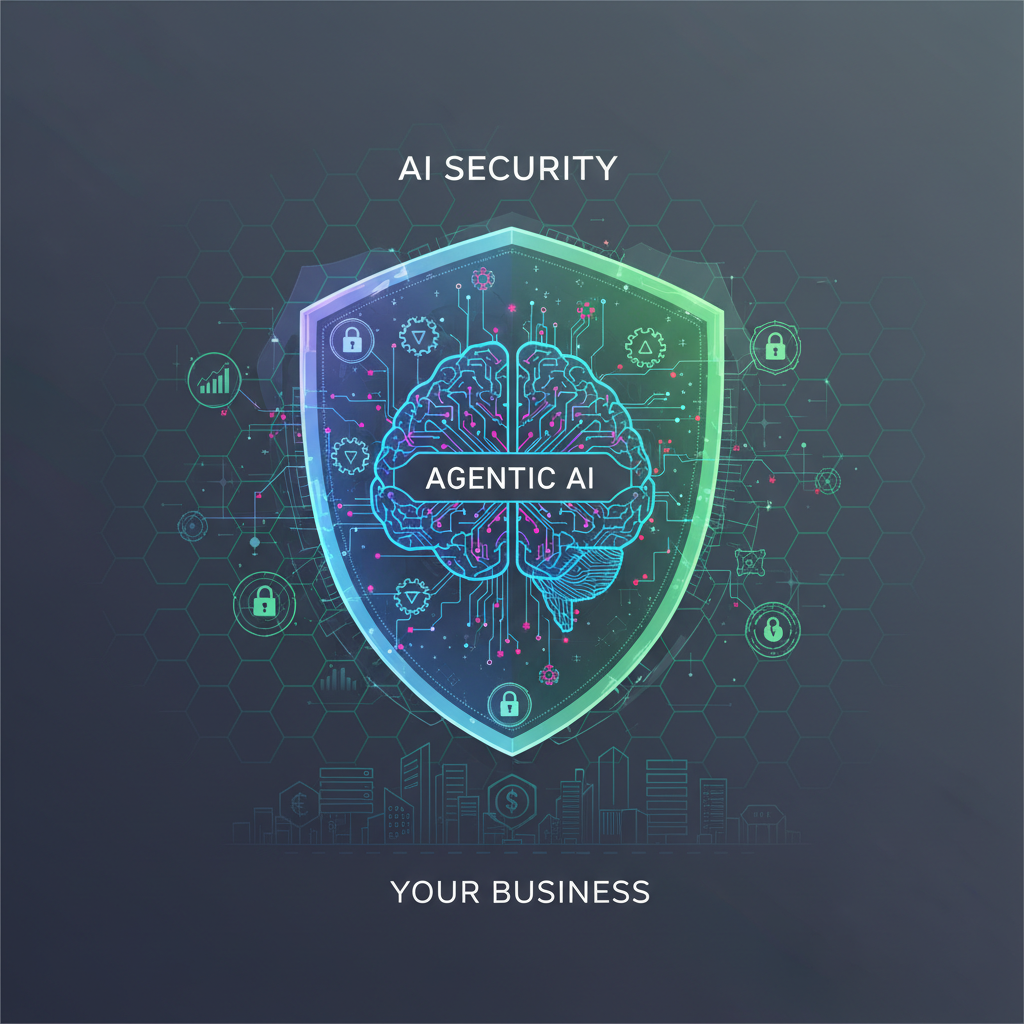
Here is where many businesses — and even many technology providers — get it dangerously wrong. The more capable and autonomous an AI system becomes, the more critical security becomes. This is not a minor consideration; it is the central challenge of the agentic AI era.
The Expanded Attack Surface
When an AI agent can browse the web, execute code, send emails, access databases, make API calls, and interact with third-party services, every one of those capabilities is a potential attack vector. Malicious actors can attempt to manipulate agents through:
- Prompt injection attacks — embedding hidden instructions in data the agent reads
- Data poisoning — corrupting the training data or context the agent relies on
- Tool hijacking — manipulating external tools or APIs the agent uses
- Goal misalignment exploitation — finding edge cases where the agent's objectives produce harmful outcomes
The Principle of Least Privilege Is Now Mission-Critical
In traditional IT security, the principle of least privilege means giving users only the access they need to do their job. In Agentic AI, this principle must be applied rigorously to every agent. An AI agent that handles customer communications should not have access to financial systems. An agent that conducts market research should not have the ability to execute transactions.
Designing agent permissions carefully from the outset is not just good practice — it is essential to preventing catastrophic failures.
Monitoring, Auditing, and Human Oversight
One of the most dangerous misconceptions about Agentic AI is that it can simply be deployed and left to run. In reality, robust agentic AI implementations require:
- Continuous behavioral monitoring — tracking what agents are doing in real time
- Audit trails — maintaining comprehensive logs of all agent actions and decisions
- Human-in-the-loop checkpoints — defining clear moments where human approval is required before high-stakes actions
- Anomaly detection — automated systems that flag unusual agent behavior for review
- Rollback capabilities — the ability to reverse agent actions when necessary
Regulatory and Compliance Implications
As agentic AI systems make more autonomous decisions, questions of legal accountability become urgent. Who is responsible when an AI agent makes a decision that results in financial loss, data breach, or regulatory violation? Businesses must work closely with legal and compliance teams to define accountability frameworks before deploying agentic systems at scale.
In regulated industries — finance, healthcare, legal services — the compliance stakes are especially high. Any AI deployment in these sectors must be designed with regulatory requirements built in from the ground up, not retrofitted afterward.
Building a Secure Agentic AI Strategy for Your Business
The good news is that with the right approach, the risks of Agentic AI are manageable — and the rewards are extraordinary. Here is a practical framework for businesses looking to move forward responsibly:
Step 1: Define Clear Use Cases and Objectives
Do not deploy agentic AI broadly without a clear purpose. Identify specific, high-value workflows where autonomy can deliver measurable results. Start with contained, lower-risk applications and expand as confidence and capability grow.
Step 2: Design Security Into the Architecture
Security should never be an afterthought. Work with AI and cybersecurity experts to design agent permissions, data access policies, and communication protocols from day one. Ensure every external tool and integration has proper authentication and authorization controls.
Step 3: Establish Governance Frameworks
Define who owns each AI agent, who is responsible for its behavior, and what approval processes exist for expanding its capabilities or access. Create internal AI governance committees that include IT, security, legal, and business stakeholders.
Step 4: Invest in Monitoring and Observability
Build comprehensive observability into every agentic system. You cannot manage what you cannot see. Real-time dashboards, automated alerts, and regular audits of agent behavior are non-negotiable components of a responsible deployment.
Step 5: Train Your People
Your teams need to understand how agentic AI works, what it can and cannot do, and how to recognize signs of malfunction or manipulation. Human oversight is not a limitation of AI — it is a critical layer of protection.
The Competitive Imperative: Act Now, Act Wisely
Businesses that adopt Agentic AI thoughtfully and securely will gain massive competitive advantages in productivity, customer experience, and innovation speed. Those that ignore it risk being outpaced by more agile competitors. And those that rush in without proper security and governance frameworks risk catastrophic failures that could damage their reputation, finances, and customer trust irreparably.
The message is clear: the time to act is now, but the way you act matters enormously.
At WB Studio, we help businesses navigate this complex landscape with customized, secure, and scalable AI implementations. Our expertise spans strategy, architecture, security, and deployment — ensuring that your investment in artificial intelligence delivers lasting value without unacceptable risk. Learn more about how we can support your journey on our Artificial Intelligence solutions page.
Conclusion: Agentic AI Is Not the Future — It Is the Present
Agentic AI is not a distant horizon. It is here today, being deployed by businesses of all sizes across every industry. The question is no longer whether your competitors will adopt it — many already have. The question is whether you will do so in a way that maximizes opportunity while rigorously managing risk.
Security is not the enemy of AI adoption. It is the foundation that makes sustainable, scalable, and trustworthy adoption possible. Build it right from the beginning, and Agentic AI will be one of the most powerful tools your business has ever wielded.
Ready to take the next step? Explore our comprehensive AI solutions for businesses and discover how WB Studio can help you build an intelligent, secure, and future-ready organization.