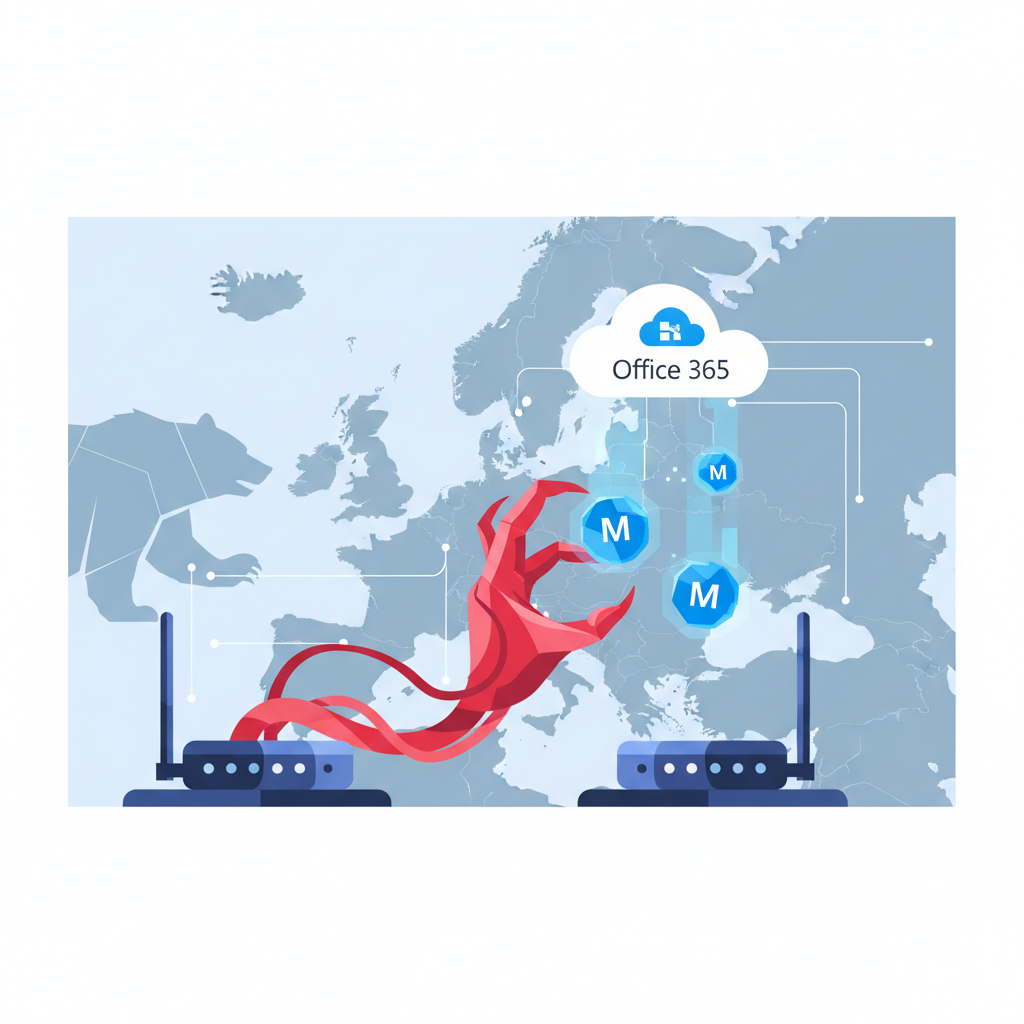
Russia's Router Hijacking Campaign to Steal Microsoft Office Tokens: 5 Immediate Steps for European Businesses
A sophisticated and deeply alarming cyberattack campaign linked to Russian state-sponsored threat actors has been targeting network infrastructure across Europe and beyond. This campaign specifically focuses on hijacking routers and network devices to intercept and steal Microsoft Office 365 authentication tokens, giving attackers persistent, undetected access to corporate email systems, cloud storage, and sensitive business communications. For European businesses, the threat is not theoretical — it is active, evolving, and requires immediate action.
Understanding the mechanics of this attack, the specific risks it poses, and the concrete steps your organization can take to defend itself is no longer optional. In today's threat landscape, preparedness is the only viable strategy.
Understanding the Russian Router Hijacking Campaign
Who Is Behind the Attack?
Security researchers and government agencies, including advisories from the UK's NCSC, the US CISA, and Europol-affiliated cybersecurity bodies, have attributed this campaign to APT28, also known as Fancy Bear, Sofacy, or Forest Blizzard — a threat group widely believed to operate under the direction of Russia's GRU military intelligence agency. This group has a long and well-documented history of targeting governmental organizations, defense contractors, energy companies, and critical infrastructure.
More recently, their tactics have evolved to target mid-sized and large European enterprises, particularly those in logistics, legal services, healthcare, and financial sectors — industries that handle highly sensitive data and are often less fortified than government-adjacent organizations.
How Router Hijacking Enables Token Theft
The attack methodology is technically sophisticated but devastatingly effective. Here is how it typically unfolds:
- Initial Compromise: Threat actors exploit known vulnerabilities in edge routers, VPN concentrators, and network appliances — particularly devices that are unpatched or running end-of-life firmware. Brands including Cisco, TP-Link, ASUS, and Ubiquiti have been mentioned in advisories as targets.
- Traffic Interception: Once a router is compromised, attackers can perform man-in-the-middle (MitM) attacks, silently intercepting network traffic flowing through the device.
- Token Harvesting: As employees authenticate to Microsoft Office 365 or Azure Active Directory, their OAuth tokens — the digital keys that allow persistent access without re-entering passwords — are captured. These tokens can remain valid for hours or even days.
- Silent Account Access: Using stolen tokens, attackers access Microsoft 365 mailboxes, SharePoint documents, Teams conversations, and OneDrive files without triggering standard password-based alerts.
- Lateral Movement and Exfiltration: With a foothold established, attackers move laterally through the network, exfiltrating sensitive data and setting up persistent backdoors for long-term espionage.
What makes this campaign especially dangerous is its stealth. Because attackers use legitimate authentication tokens rather than stolen passwords, many standard security monitoring tools fail to detect anything unusual. The breach can go unnoticed for weeks or months.
Why European Businesses Are Especially Vulnerable
European organizations face a unique combination of risk factors. The heavy reliance on Microsoft 365 as a productivity platform, combined with aging network hardware in many SMEs and mid-market enterprises, creates fertile ground for this type of attack. Additionally, GDPR and other regulatory frameworks mean that a successful breach carries not only operational consequences but severe financial and reputational penalties.
The geopolitical climate further elevates risk. With ongoing tensions related to the conflict in Ukraine, sanctions enforcement, and European defense policy shifts, Russian intelligence agencies have strong motivations to target European corporate and governmental networks for both economic espionage and strategic intelligence gathering.
5 Immediate Steps European Businesses Must Take
Step 1: Audit and Update All Network Edge Devices Immediately
Your routers, firewalls, VPN gateways, and network switches are the front line of this attack. Begin with a complete inventory of all network perimeter devices, including make, model, firmware version, and support status. Any device running end-of-life firmware or that has not been patched in the last 90 days should be treated as potentially compromised.
- Apply all available firmware updates immediately
- Disable unnecessary remote management interfaces (e.g., Telnet, HTTP management panels)
- Replace any devices that are no longer supported by their manufacturers
- Change all default administrative credentials and enforce strong, unique passwords
- Restrict management access to specific, trusted IP addresses only
If you do not have a dedicated network team, engage a qualified managed security service provider (MSSP) with experience in network infrastructure hardening.
Step 2: Implement Conditional Access Policies in Microsoft 365
Microsoft 365 and Azure Active Directory offer powerful Conditional Access tools that can significantly limit the damage caused by stolen authentication tokens. These policies allow you to enforce additional verification requirements based on user behavior, device health, location, and risk signals.
- Enable Conditional Access policies that require compliant or hybrid Azure AD-joined devices
- Restrict access to Microsoft 365 services from unexpected geographic locations, particularly regions outside your normal business operations
- Enforce Multi-Factor Authentication (MFA) for all users without exception — this is non-negotiable
- Enable token binding and set shorter token lifetimes for high-risk user roles
- Use Microsoft's sign-in risk policies to automatically block or challenge suspicious login attempts
Conditional Access is one of the most effective controls available within the Microsoft ecosystem, yet many organizations leave it misconfigured or underutilized. A quick audit of your Azure AD settings could reveal significant gaps.
Step 3: Deploy Advanced Threat Detection and Network Monitoring
Standard logging is not enough to detect this type of campaign. You need behavioral analytics and anomaly detection capabilities that can identify token misuse even when credentials appear legitimate.
- Enable Microsoft Defender for Identity and Microsoft Defender for Cloud Apps to monitor for suspicious OAuth token usage
- Deploy network detection and response (NDR) tools to monitor for unusual traffic patterns on edge devices
- Set up alerts for impossible travel scenarios — for example, a user authenticating from London and then from Eastern Europe within minutes
- Review and centralize all authentication logs in a SIEM (Security Information and Event Management) platform
- Monitor for unusual data exfiltration patterns, particularly large email downloads or SharePoint bulk exports
The goal is to shorten your mean time to detect (MTTD) a breach from weeks or months to hours or days. Early detection dramatically limits the potential damage.
Step 4: Conduct an Immediate Microsoft 365 Security Review
Many organizations have been running Microsoft 365 for years without ever conducting a formal security review. Given the current threat environment, this is the moment to do it. A comprehensive review should include:
- Reviewing all OAuth app consents — look for third-party applications with excessive permissions that could be abused
- Auditing guest account access and external sharing settings in SharePoint and Teams
- Checking for mailbox forwarding rules that may have been set up by attackers to silently copy emails to external addresses
- Reviewing admin role assignments and ensuring the principle of least privilege is enforced
- Enabling unified audit logs and ensuring they are retained for at least 90 days, preferably 365 days
Microsoft provides the Secure Score tool within the Microsoft 365 Defender portal, which gives you a measurable benchmark of your current security posture and actionable recommendations for improvement. Use it.
Step 5: Train Your Staff and Update Your Incident Response Plan
Technology alone cannot protect your organization. Human awareness and organizational preparedness are equally critical. Your employees are often the first line of defense — and the first to be targeted.
- Run targeted security awareness training focused on phishing, credential harvesting, and suspicious link recognition
- Ensure IT and security staff understand the specific techniques used in token theft attacks
- Update your incident response plan to include specific playbooks for compromised authentication tokens and router breaches
- Conduct tabletop exercises that simulate a token hijacking scenario to test your team's readiness
- Establish clear escalation procedures and ensure staff know who to contact — internally and externally — if a breach is suspected
Additionally, ensure your organization has a relationship with a credible cybersecurity incident response firm that can be called upon at short notice. Waiting until a crisis strikes to find that support is a costly mistake.
The Broader Lesson: Defense in Depth Is Not Optional
The Russian router hijacking campaign targeting Microsoft Office tokens is a stark reminder that modern cyberattacks exploit the entire attack surface — not just endpoints or email systems, but the network infrastructure that connects everything. A single unpatched router can become the entry point for a nation-state level intelligence operation.
European businesses must move beyond checkbox compliance and embrace a genuine culture of cybersecurity resilience. The five steps outlined above are immediate, actionable, and achievable for organizations of all sizes. But they should be viewed as the beginning of a more comprehensive security program, not the end.
Threat actors backed by nation-states have nearly unlimited resources, patience, and technical sophistication. The only effective response is a layered, vigilant, and continuously improving security posture — one that leaves no easy entry points and detects intrusions quickly when they do occur.
The threat is real. The time to act is now.